

Left shoulder pain can feel uncomfortable when you pick up items get dressed sleep or reach for something. Left shoulder pain may show up after some work or may come suddenly without any clear cause.
Left shoulder pain might stay in the shoulder. Travel to your neck back, arm or hand.
Many causes can lead to shoulder pain. Not every cause comes from muscle or joint problems. Spotting signs and indicators and understanding the warning signs that point to a more serious medical issue can be very important. Here is a complete guide, to the causes of shoulder pain its signs and symptoms and ways to prevent the return of left shoulder discomfort.
What Reasons Left Shoulder Pain?
The shoulder joint is a joint that is made up of muscles, tendons, and bones. If there is any problem with any of these components, there could be pain in the shoulder joint..
Common causes include:
- Muscle strain: Overstretching or overusing shoulder muscles can cause soreness and stiffness.
- Rotator cuff problems: Injuries or inflammation involving the rotator cuff tendons can make lifting the arm painful.
- Frozen shoulder: This condition causes stiffness and gradually reduces shoulder movement.
- Tendinitis: Inflammation of shoulder tendons may lead to discomfort, particularly during movement.
- Poor posture: Spending long hours sitting at a desk or looking down at a phone can contribute to neck and shoulder tension.
- Nerve compression: Irritated nerves in the neck can cause pain that travels into the shoulder and arm.
The place where the pain is how bad it is and how long it lasts can give hints. A doctor’s check-up might be required to find out exactly what is causing it.
Left Shoulder Pain in Women: Common Causes and Warning Signs
There are many factors that can be behind a woman experiencing pain in her left shoulder. The factors may include muscle injury, joint glitches, hormonal changes, and nerve complications among others. It should be noted however that there are other health conditions that could result in left shoulder joint pain.
Heart attack does not always lead to a crushing chest pain but could instead cause shoulder, arm, neck, jaw or back pain accompanied by exhaustion and breathing difficulties.
Other possible causes include:
- Muscle strain from daily activities or exercise.
- Rotator cuff inflammation or shoulder stiffness.
- Neck-related nerve irritation.
- Changes in posture during pregnancy.
- Joint conditions that become more common with age.
Important: Sudden shoulder or arm discomfort accompanied by chest pressure, shortness of breath, sweating, nausea, faintness or pain spreading to the jaw or back could indicate a heart attack. Seek emergency medical help immediately. Do not assume that the symptoms are simply muscular.
Left Hand and Shoulder Pain: Why Does It Happen?
When pain affects both the left hand and shoulder, the source may involve muscles, joints or nerves.
One possible explanation is cervical radiculopathy, which occurs when a nerve in the neck becomes irritated or compressed. It can cause pain travelling from the neck towards the shoulder, arm and hand.
Other symptoms may include:
- Tingling or numbness in the fingers.
- Weakness in the arm or hand.
- Burning or shooting pain.
- Discomfort that increases with certain neck movements.
Carpal tunnel syndrome can cause hand symptoms, but it does not usually explain shoulder pain by itself. When discomfort affects multiple areas, a healthcare professional can help determine whether the symptoms are connected.
Left Shoulder Pain Without Injury
Experiencing left shoulder pain without injury can be confusing, especially when there has been no fall, accident or heavy lifting.
Several conditions may explain this type of discomfort:
- Poor sleeping position: Sleeping with pressure on one shoulder may cause temporary soreness.
- Postural problems: Sitting for extended periods with rounded shoulders can increase muscle tension.
- Frozen shoulder: Gradual stiffness and pain may develop without a specific injury.
- Tendon inflammation: Repetitive movements can irritate shoulder tendons over time.
- Nerve problems: A compressed nerve in the neck may cause shoulder discomfort without direct shoulder injury.
- Referred pain: Problems involving the heart or other internal organs can sometimes cause pain around the shoulder.
Persistent, unexplained or worsening pain should be assessed by a healthcare professional rather than treated as an ordinary muscle problem.
Left Shoulder Blade Pain: Possible Reasons
The shoulder blade, also known as the scapula, is surrounded by muscles that support arm and shoulder movement. Pain in this region can develop because of muscle strain, poor posture or problems affecting the spine.
Common causes include:
- Tight upper-back muscles.
- Long periods of sitting or working at a computer.
- Muscle overuse during exercise.
- Irritation of nerves in the neck or upper back.
- Problems involving the shoulder joint.
Some people experience a dull ache between the shoulder blade and spine, while others notice sharp discomfort during movement.
However, left shoulder blade pain should not automatically be considered muscular. If it occurs alongside chest discomfort, breathing difficulties, sweating or nausea, seek emergency medical assistance.
Left-Sided Neck and Shoulder Pain
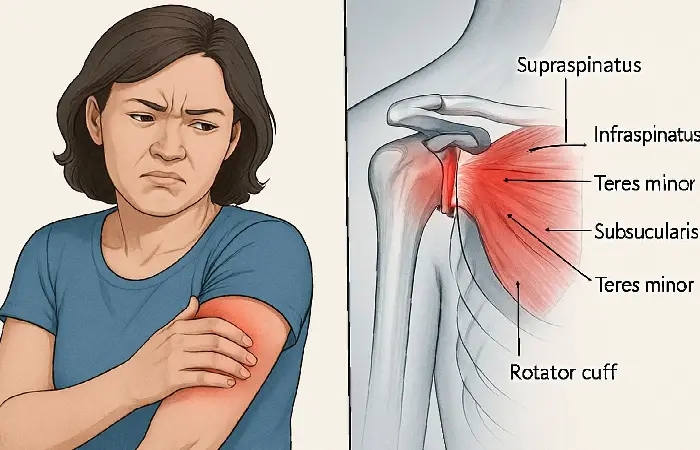
Left-sided neck and shoulder pain often occurs together because the neck and shoulder share muscles, joints and nerve pathways.
Common contributing factors include:
- Poor desk posture.
- Sleeping with an unsuitable pillow.
- Muscle tension and stress.
- Cervical spine problems.
- Nerve irritation or compression.
Discomfort may radiate from the sides of the neck to the shoulders, upper back, or arms. Mild exercises, postural corrections, and the right type of physical therapy can assist if muscle tension is the reason.
In case of severe and persistent pain associated with arm weakness, numbness, fever, a severe headache, and other alarming signs, medical evaluation is necessary.
Left Shoulder Pain Treatment: What Can Help?

The correct left shoulder pain treatment is dependent on the root cause of the problem, its severity, and its duration. Simple self-care can help alleviate mild muscle pain, but if the pain is chronic, medical treatment might be needed.
Common treatment options include:
1. Rest and Activity Modification
Any actions that may cause more pain, especially those involving lifting and overhead actions should be avoided. Immobilization for an extended period can lead to stiffness; therefore, limited movements can be beneficial.
2. Cold and Heat Therapy
A cool pack applied using a towel for about 15 to 20 minutes can be helpful in reducing pain and swelling. Heat can be effective in easing tense muscles and stiffness. Avoid using extreme temperatures on the skin.
3. Pain Relief Medication
The healthcare provider or pharmacist can give advice on what kinds of pain relievers to take. It all depends on medical history and other medications being taken.
4. Physiotherapy
Physiotherapy can be used to aid shoulder function, flexibility, and strengthening. The physiotherapist will suggest certain exercises depending on which part of the shoulder is affected – rotator cuff, frozen shoulder, neck muscles, etc.
5. Medical Procedures
In some cases, injections, further tests, or surgery may be considered as treatment. This decision usually depends on the diagnosis and whether other treatments have worked.
When Should You See a Doctor for Left Shoulder Pain?
Not every case of shoulder discomfort requires emergency treatment, but some symptoms should never be ignored.
Seek emergency medical assistance if left shoulder pain occurs with:
- Chest pressure, tightness or discomfort.
- Difficulty breathing.
- Cold sweating or sudden dizziness.
- Nausea or fainting.
- Pain spreading to the jaw, back or arm.
All of these can be indicators of a heart attack even in cases when chest pain may not be present.
Seek medical help if you have ongoing and increasing pain or inflammation, difficulty moving your shoulder joint, unexpected weakness or other symptoms that affect your sleep and day-to-day functioning.
If you feel sudden pain, immobility of your arm, any vicissitudes in its arrival or numbness/pain after an injury, access a doctor.
How to Prevent Left Shoulder Pain
A few everyday conducts can help reduce unnecessary weight on the shoulder joint muscles & joints:
- Maintain a comfortable sitting posture while working.
- Keep computer screens at eye level.
- Avoid carrying heavy bags on one shoulder.
- Take regular breaks from desk work.
- Warm up before exercise or lifting weights.
- Avoid sleeping directly on a painful shoulder.
- Follow appropriate stretching and strengthening exercises.
- Maintain a regular physical activity routine.
Inhibition is chiefly useful for people who spend long times employed at CPUs or performing dull physical doings.
FAQ’s
1. What causes left shoulder pain?
Achy muscles, inflamed tendons, rotator cuff injuries, and poor posture are all common causes. Heart issues and nerve issues, on the other hand, can cause pain in the left shoulder.
2. Can pain in my left shoulder be a heart attack?
Can shoulder or arm pain be a warning sign of a heart attack? Yes. If your left shoulder or arm pain occurs with pressure or pain in your chest, shortness of breath, sweating, nausea or dizziness, get emergency help.
3. Why does my left shoulder hurt without an injury?
There are many reasons why you would experience shoulder pain without an injury, this could be down to sleep position, frozen shoulder, tendon inflammation, nerve impingement, or a symptom of an internal medical condition.
4. Can neck problems cause left shoulder and hand pain?
Yes. Pain, numbness, tingling or weakness that originates in the neck due to pinched or compressed nerve(s) can radiate outwards to the shoulder, arm and even down to the hand.
5. How long does pain in the left shoulder last?
The healing process depends on the cause. For example, if your pain is in the muscle, recovery may take a few days or weeks. If you have frozen shoulder or a rotator cuff injury, this could take longer.
Conclusion
Here is what your necessity to know around left shoulder joint joint pain advance, symptoms and causes. Symptoms and causes of left shoulder pain Left shoulder joint pain can originate from muscles, tendons, nerves, other shoulder problems or other medical conditions. Mild pain that is relieved by activity modification & exercise does not cause concern however abrupt, persistent pain needs to be checked and when left shoulder pain occurs with chest uneasiness, smallness of breath, sweating or feeling sick, seek emergency medical care.