

Frozen shoulder, also known as adhesive capsulitis, is a condition that causes pain, stiffness and reduced movement in the shoulder joint. It can make everyday activities such as getting dressed, raising the arm, lifting objects and sleeping uncomfortable. The condition usually develops gradually and may take several months or longer to improve.
There is no single treatment that works for everyone with frozen shoulder. The most suitable approach depends on the severity of the symptoms and the individual’s condition. Treatment options may include gentle exercises, self-care techniques, physiotherapy and medical interventions. Understanding these options can help patients choose an appropriate treatment plan with guidance from a healthcare professional.
What Is Frozen Shoulder and What Causes It?
Frozen shoulder is when the tissues surrounding the shoulder joint become inflamed and tight. This causes pain and restricts shoulder movement.
The condition typically occurs between ages 40 and 60. Those with diabetes, thyroid problems, injury to or surgery on the shoulder are at an increased risk.
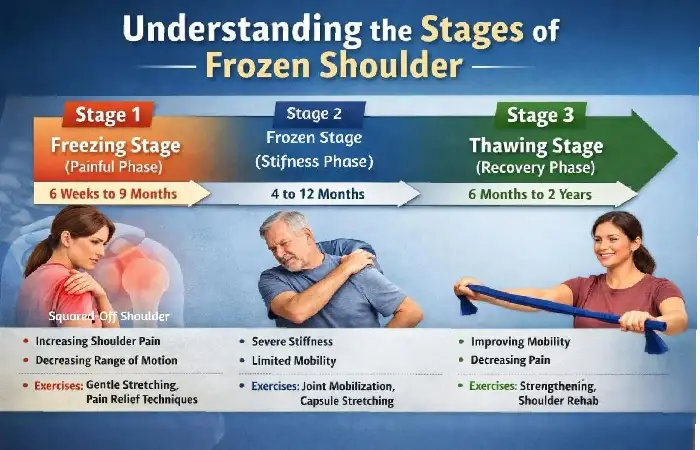
Frozen shoulder generally progresses through three stages:
- Freezing stage: Shoulder pain gradually increases, and movement becomes more difficult.
- Frozen stage: Pain may decrease, but stiffness continues to restrict movement.
- Thawing stage: Shoulder mobility gradually improves over time.
Recovery differs between individuals and can take calendar month or longer.
Frozen Shoulder Treatment at Home
Managing symptoms with home remedies can also aid recovery, especially when they are supported by advice from a healthcare professional. But home remedies should not take the place of appropriate treatment when pain or stiffness are severe..
Some helpful approaches include:
- Apply warm compresses: Use a warm towel or heating pad wrapped in cloth for up to 20 minutes to help ease stiffness before gentle movement.
- Maintain gentle movement: Avoid keeping the shoulder completely still, as prolonged immobility can increase stiffness.
- Avoid heavy lifting: Reduce activities that place excessive pressure on the affected shoulder.
- Maintain comfortable posture: Keep your shoulders relaxed and avoid positions that increase discomfort.
- Follow a regular exercise routine: Perform only the movements recommended by your doctor or physiotherapist.
These measures may help reduce discomfort and maintain mobility during recovery.
Frozen Shoulder Physiotherapy Treatment
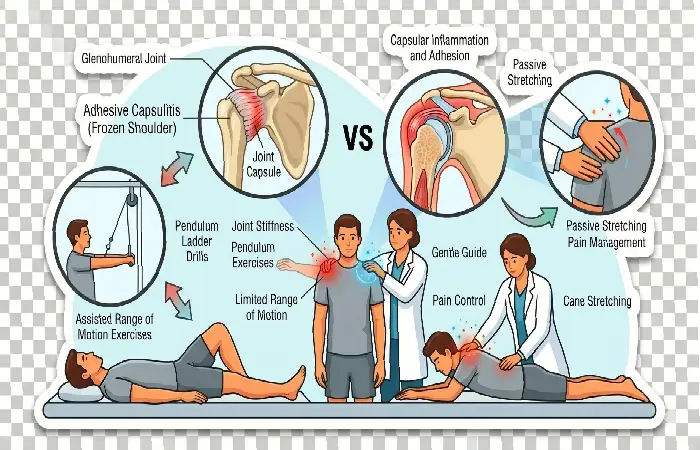
Physiotherapy is an important part of frozen shoulder management. A qualified physiotherapist assesses shoulder movement, pain levels and stiffness before recommending an appropriate rehabilitation programme.
Common physiotherapy approaches include:
- Range-of-motion exercises: Gentle movements help maintain and gradually improve shoulder flexibility.
- Stretching techniques: Controlled stretching helps address tightness around the shoulder joint.
- Posture correction: Improving posture may support more comfortable shoulder movement.
- Strengthening exercises: Appropriate strengthening can help restore shoulder function as mobility improves.
The treatment programme should match the stage and severity of the condition. Aggressive stretching can worsen symptoms, so exercises should never be forced.
Frozen Shoulder Exercises to Improve Mobility
Gentle, frequent drive can help to loosen the joint. Some recommended movements are:
1. Pendulum Exercise
Move onward a little, supporting yourself on the table with the arm that is not affected. Let the arm that is affected hang loosely & move it backwards and forwards, and in small circles.
2. Climbing the Wall Exercise
Stand with your hand and arm in contradiction of a wall. With the fingers of the healthy hand next to the fingers of the affected hand, walk the fingers up the wall until you feel a gentle stretch. Do not push finished painful stretch.
3. Shoulder Rolls
Sit or stand in a comfortable location. Gently roll your shoulders forward and backward. Move slowly and with your shoulders relaxed.
4. External Rotation with Assistance
Keep your elbows tucked hooked on your sides and hold a light stick to assist you in slowly separating the involved forearm from your body. Stop when you experience a comfortable stretch.
Take it slow and do as your exercise recommends about the repetitions. Drop an exercise if it causes sharp pain and worsens your symptoms.
Ayurvedic Treatment for Frozen Shoulder
Ayurvedic approaches may be considered by individuals interested in traditional wellness practices. Some commonly discussed choices include gentle massage, warm oil applications and supervised therapeutic practices.
However, there is insufficient high-quality clinical evidence to establish Ayurvedic treatments as a cure for frozen shoulder.
Before trying herbal arrangements, massage or other therapies, consult a qualified healthcare professional. Avoid forceful manipulation or treatments that increase pain, and check for possible interactions between herbal products and prescribed medicines.
Frozen Shoulder Treatment in Homeopathy
Homeopathy is another alternative approach that some people consider for managing musculoskeletal discomfort. Different homeopathic preparations may be recommended by practitioners depending on individual symptoms.
However, reliable scientific evidence does not establish homeopathy as an effective treatment for frozen shoulder or demonstrate that it restores shoulder movement.
It should not replace evidence-based medical care, physiotherapy or prescribed treatment. Discuss alternative therapies with your healthcare provider before using them.
Frozen Shoulder Pain Areas: Where Does It Hurt?
Frozen shoulder pain generally develops around the shoulder joint and may affect nearby areas.
Common frozen shoulder pain areas include:
- Outer shoulder: Pain around the upper arm and outside of the shoulder.
- Front of the shoulder: Discomfort near the joint, particularly during forward movements.
- Upper arm: Pain may extend from the shoulder towards the upper arm.
- Shoulder blade region: Some individuals experience discomfort around the surrounding shoulder muscles.
Pain is often worse at night, particularly when lying on the affected side. Restricted movement may also make reaching behind the back or lifting the arm difficult.
When Should You See a doctor?
Consult a healthcare professional if shoulder pain or stiffness persists, interferes with daily activities or progressively becomes worse. A doctor can assess your symptoms and rule out other shoulder conditions.
Depending on the severity, treatment may include pain-relieving medication, corticosteroid injections, physiotherapy or other specialist procedures.
Seek urgent medical assessment if shoulder pain follows a serious injury or occurs alongside chest pain, breathlessness or other concerning symptoms.
Conclusion
To seek a Frozen shoulder treatment, you will need a lot of patience and a structured recovery plan. You can consider home remedies, exercise, and physiotherapy as a way to ease pain and restore the motion range of the shoulder. Though sometimes offered, there is a lack of scientific evidence for homeopathy and Ayurvedic treatment.
Either way, the optimal approach in this situation would be to either visit the trained expert.